Showing posts with label wife. Show all posts

The Shaytaan in You (Hadith No. 1746)

Bismillah.
Volume 3, Book 33, Number 251:
Narrated Ali bin Al-Husain:
Safiya (radiallaahu `anhaa), the wife of the Prophet (sallallaahu `alayhi wasallam) told me that she went to Allah's Apostle (sallallaahu `alayhi wasallam) to visit him in the mosque while he was in Itikaf in the last ten days of Ramadan. She had a talk with him for a while, then she got up in order to return home. The Prophet (sallallaahu `alayhi wasallam) accompanied her. When they reached the gate of the mosque, opposite the door of Um-Salama (radiallaahu `anhaa), two Ansari men were passing by and they greeted Allah's Apostle (sallallaahu `alayhi wasallam). He told them: Do not run away! And said, "She is (my wife) Safiya bint Huyai (radiallaahu `anhaa)." Both of them said, "Subhan Allah, (How dare we think of any evil) O Allah's Apostle (sallallaahu `alayhi wasallam)!" And they felt it. The Prophet (sallallaahu `alayhi wasallam) said (to them), "Satan reaches everywhere in the human body as blood reaches in it, (everywhere in one's body). I was afraid lest Satan might insert an evil thought in your minds."
  1. Wives may visit their husbands in I`tikaaf.
  2. The man may accompany his wife on her way back - not leaving the masjid without necessity.
  3. Never entertain evil thoughts about your Muslims brothers and sisters in your head. Never.
  4. If you're doing something that might seem fishy to others, you might as well explain to them your intention/the reality before Shaytan gets the better of them.
  5. Prophet (sallallaahu `alayhi wasallam) said "Shaytan reaches everywhere in the human body as blood reaches in it", and we take this statement on face value. We do NOT try to explain and rationalize everything according to modern day science like it's been done in this article. *face-palm*

One Cute Incident (Ahadith 1744 - 1745)

Bismillah.
Volume 3, Book 33, Number 249:
Narrated 'Amra:
Aisha (radiallaahu `anhaa) said, "the Prophet (sallallaahu `alayhi wasallam) used to practice Itikaf in the last ten days of Ramadan and I used to pitch a tent for him, and after offering the morning prayer, he used to enter the tent." Hafsa (radiallaahu `anhaa) asked the permission of 'Aisha (radiallaahu `anhaa) to pitch a tent for her and she allowed her and she pitched her tent. When Zainab bint Jahsh (radiallaahu `anhaa) saw it, she pitched another tent. In the morning the Prophet (sallallaahu `alayhi wasallam) noticed the tents. He said, 'What is this?" He was told of the whole situation. Then the Prophet (sallallaahu `alayhi wasallam) said, "Do you think that they intended to do righteousness by doing this?" He therefore abandoned the Itikaf in that month and practiced Itikaf for ten days in the month of Shawwal."

Volume 3, Book 33, Number 250:
Narrated 'Aisha (radiallaahu `anhaa):
The Prophet (sallallaahu `alayhi wasallam) intended to practice Itikaf and when he reached the place where he intended to perform Itikaf, he saw some tents, the tents of 'Aisha (radiallaahu `anhaa), Hafsa (radiallaahu `anhaa) and Zainab (radiallaahu `anhaa). So, he said, "Do you consider that they intended to do righteousness by doing this?" And then he went away and did not perform Itikaf (in Ramadan) but performed it in the month of Shawwal for ten days.
Prophet (sallallaahu `alayhi wasallam) feared that the wives' intentions might be inclined more towards pleasing him rather than pleasing Allah, so he abandoned I`tikaaf to discourage such behavior. Aren't wives (Mothers of the Believers, and wives in general) so cute? :)

The Best of Women (Hadith No. 1542)


Bismillah.
Hadith No. 1541 (below) is a repeat. Read it here.
Volume 3, Book 27, Number 18:
Narrated Hisham Ibn 'Urwa from his father who said:
While I was a youngster, I asked 'Aisha (radiallaahu `anhaa) the wife of the Prophet (sallallaahu `alayhi wasallam). "What about the meaning of the Statement of Allah;
"Verily! (the mountains) As-Safa and Al Marwa, are among the symbols of Allah. So, it is not harmful if those who perform Hajj or 'Umra of the House (Ka'ba at Mecca) to perform the going (Tawaf) between them? (2.158) I understand (from that) that there is no harm if somebody does not perform the Tawaf between them." 'Aisha (radiallaahu `anhaa) replied, "No, for if it were as you are saying, then the recitation would have been like this: 'It is not harmful not to perform Tawaf between them.' This verse was revealed in connection with the Ansar who used to assume the Ihram for the idol Manat which was put beside a place called Qudaid and those people thought it not right to perform the Tawaf of As-Safa and Al-Marwa. When Islam came, they asked Allah's Apostle (sallallaahu `alayhi wasallam) about that, and Allah revealed:--
"Verily! (the mountains) As-Safa and Al-Marwa Are among the symbols of Allah. So, it is not harmful of those who perform Hajj or 'Umra of the House (Ka'ba at Mecca) to perform the going (Tawaf) between them." (2.158) Sufyan and Abu Muawiya added from Hisham (from 'Aisha (radiallaahu `anhaa)): "The Hajj or 'Umra of the person who does not perform the going (Tawaf) between As-Safa and Al-Marwa is incomplete in Allah's sight.

Today's Hadith:

Volume 3, Book 27, Number 19:
Narrated Isma'il:
Abdullah bin Abu Aufa (radiallaahu `anhu) said: "Allah's Apostle (sallallaahu `alayhi wasallam) performed 'Umra and we too performed 'Umra along with him. When he entered Mecca he performed the Tawaf (of Ka'ba) and we too performed it along with him, and then he came to the As-Safa and Al-Marwa (i.e. performed the Sai) and we also came to them along with him. We were shielding him from the people of Mecca lest they may hit him with an arrow." A friend of his asked him (i.e. 'Abdullah bin Aufa (radiallaahu `anhu)), "Did the Prophet (sallallaahu `alayhi wasallam) enter the Ka'ba (during that 'Umra)?" He replied in the negative. Then he said, "What did he (the Prophet (sallallaahu `alayhi wasallam)) say about Khadija (radiallaahu `anhaa)?" He (Abdullah bin Aufa (radiallaahu `anhu)) said, "(He said) 'Give Khadija (radiallaahu `anhaa) the good tidings that she will have a palace made of Qasab in Paradise and there will be neither noise nor any trouble in it."
I'll discuss only the last part of the Hadith, about Khadija (radiallaahu `anhaa). I don't know about you, but her mention always brings a smile on my face. What a lady! I wonder sometimes how can someone love another so selflessly..? How can someone devote their life, time, energies, wealth, everything to someone else and their mission? I know he was a Prophet and it was different with him. But what about before his prophet-hood? Khadija (radiallaahu `anhaa) didn't know he was going to be a Prophet later, and that's certainly not why she married him. She had married him for his noble character and honesty. And she had devoted everything to him after marriage. Not once do we get to know that she showed her superiority over him due to her wealth.
It's not like life was smooth for them. They suffered. She suffered.. because of him (apparently). A typical wife would fire taunts at the husband for the rest of her life if she had to go through any difficulty because of him. But Khadija (radiallaahu `anhaa) was not a typical wife at all! She was given glad tidings of a palace in Jannah for a reason, where there will be no noise or trouble. She was chosen to be among the best women of Jannah for a reason.
We all want to have the same destination, but we don't want to undertake the journey. How can this work?
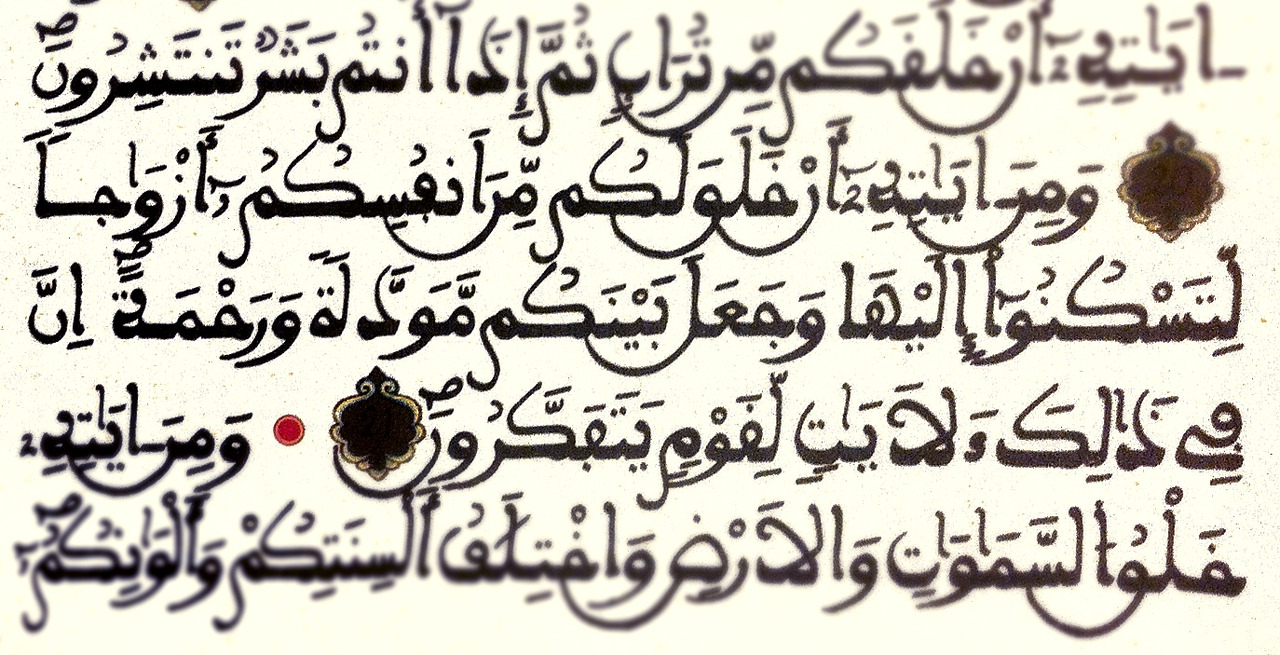
There has been a post on the unconditional love of Khadija (radiallaahu `anhaa) before as well. Make sure to check it out!

Can a Woman Give Zakah to her Husband? (Hadith No. 1200)


Bismillah.
Volume 2, Book 24, Number 541:
Narrated Abu Said Al-Khudri (radiallaahu `anhu):
On 'Id ul Fitr or 'Id ul Adha Allah's Apostle (sallallaahu `alayhi wasallam) went out to the Musalla. After finishing the prayer, he delivered the sermon and ordered the people to give alms. He said, "O people! Give alms." Then he went towards the women and said. "O women! Give alms, for I have seen that the majority of the dwellers of Hell-Fire were you (women)." The women asked, "O Allah's Apostle (sallallaahu `alayhi wasallam)! What is the reason for it?" He replied, "O women! You curse frequently, and are ungrateful to your husbands. I have not seen anyone more deficient in intelligence and religion than you. O women, some of you can lead a cautious wise man astray." Then he left. And when he reached his house, Zainab (radiallaahu `anhaa), the wife of Ibn Masud (radiallaahu `anhu), came and asked permission to enter It was said, "O Allah's Apostle (sallallaahu `alayhi wasallam)! It is Zainab (radiallaahu `anhaa)." He asked, 'Which Zainab?" The reply was that she was the wife of Ibn Mas'ud (radiallaahu `anhu). He said, "Yes, allow her to enter." And she was admitted. Then she said, "O Prophet of Allah (sallallaahu `alayhi wasallam)! Today you ordered people to give alms and I had an ornament and intended to give it as alms, but Ibn Masud (radiallaahu `anhusaid that he and his children deserved it more than anybody else." The Prophet (sallallaahu `alayhi wasallam) replied, "Ibn Masud (radiallaahu `anhu) had spoken the truth. Your husband and your children had more right to it than anybody else."
The Standing Committee (10/62) was asked: 
Is it permissible for a woman to give the zakaah of her wealth to her husband if he is poor? 
They replied: it is permissible for a woman to give the zakaah of her wealth to her husband if he is poor so as to ward off his poverty, because of the general meaning of the verse in which Allaah says (interpretation of the meaning): 
“As-Sadaqaat (here it means Zakaah) are only for the Fuqaraa’ (poor), and Al-Masaakeen (the poor)”
[al-Tawbah 9:60] 
More details on the subject here.

Taken from: http://ilookilisten.wordpress.com/2012/11/30/can-a-woman-give-zakah-to-her-husband-hadith-no-1200/

Lurvvvv! (Hadith No. 1170)


Bismillah.
Narrated 'Aisha:
During his sickness, Allah's Apostle was asking repeatedly, "Where am I today? Where will I be tomorrow?" And I was waiting for the day of my turn (impatiently). Then, when my turn came, Allah took his soul away (in my lap) between my chest and arms and he was buried in my house.
Prophet (SAW) would take regular turns to be with his wives. Although he loved `A'ishah (RA) more than the others, he never treated the others unjustly. During the days of his fatal illness, he became really impatient to be with `A'ishah, so he would ask again and again: 'where am I today? Where will I be tomorrow?', indicating that he wanted to visit `A'ishah real soon.
And same was the case with `A'ishah (RA); she kept getting impatient as well. So in order to fulfill Prophet (SAW)'s wish, the wives mutually decided to let `A'ishah have their share of the days. When finally he came to be with `A'ishah (RA), it was there in her lap that his soul was taken away. And it was there in her house that his body was buried. Sallallahu `alaiyhi wasallam.
When you love someone, it's natural that you desire to see them and be with them as much as possible. And with a love so pure as this one (among spouses), it's just plain cute. <3
The last person Prophet (SAW) saw before his death was `A'ishah (RA). Aww! :)
One of the greatest aims of marriage according to the laws of Allaah is so that affection and compassion may prevail between the spouses. This is the foundation on which married life should be built. Allaah, may He be exalted, says:
 
“And among His Signs is this, that He created for you wives from among yourselves, that you may find repose in them, and He has put between you affection and mercy” [al-Room 30:21] 
Al-Haafiz Ibn Katheer (may Allaah have mercy on him) said:
Affection means love, and compassion means kindness. A man keeps a woman either because he loves her or her because he feels compassion towards her because he has children from her.
Ibn Katheer (may Allah have mercy on him) also said: 
There is no love between any two souls greater than that that exists between the spouses.
Tafseer Ibn Katheer, 3/525
Difference between love and 'madness' here.
Wassalam.

Wife does not mean a servant -- Sheikh Khalid Yasin [English]


In the name of Allah , the Entirely Merciful, the Especially Merciful.
Islam has enjoined upon the husband duties towards his wife, and vice versa, and among these duties are some which are shared by both husband and wife.

=========================================
=========================================

Shaykh al-Islam Ibn Taymiyah said:

She is obliged to serve her husband according to what is reasonable among people of similar standing. That varies according to circumstances: the way in which a Bedouin woman serves (her husband) will not be like the way of a town-dweller, and the way of a strong woman will not be like the way of a weak woman. (al-Fataawa al-Kubraa, 4/561)


Disqus Shortname

designcart