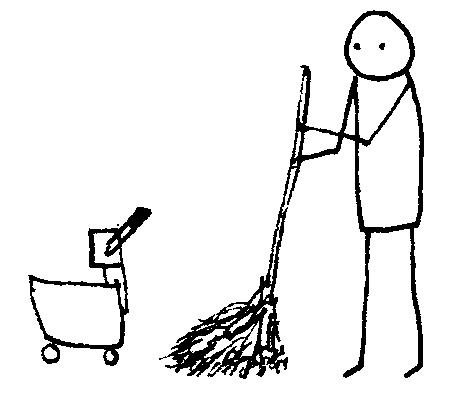
Camel > Cow > Ram > Chicken > Egg (Hadith No. 749)


Assalamu`alaykum,
Bismillah.

Today's Hadith will explain the title of this post inshaAllah. :P

Volume 2, Book 13, Number 749:
Narrated Abu Huraira:
The Prophet said, "When it is a Friday, the angels stand at the gate of the mosque and keep on writing the names of the persons coming to the mosque in succession according to their arrivals. The example of the one who enters the mosque in the earliest hour is that of one offering a camel (in sacrifice). The one coming next is like one offering a cow and then a ram and then a chicken and then an egg respectively. When the Imam comes out (for Jumua prayer) they (i.e. angels) fold their papers and listen to the Khutba."

The bigger you want your reward to be, the more you gotta work for it. Eggs don't weigh much, you know. :|
And what do you think about those who reach the masjid after the Imaam comes out? Even angels leave their jobs at that time to listen to the khutbah!

Share ahead!
Wassalam.

The Khutbah 'Scene' II (Hadith No. 748)


Assalamu`alaykum,
Bismillah.

Volume 2, Book 13, Number 748:
Narrated 'Abdullah Ibn Umar:
The Prophet used to deliver two Khutbas and sit in between them.
This is about the Friday Khutbah..


See the Imaam, he's standing at a raised position (minbar) to deliver the khutbah. This is Sunnah of the Prophet (SAW). One of the reasons may be to help maximum people listen to the khateeb and second, the khateeb can keep an eye on the listeners.
A little more on the Khutbah Scene here and here.
Wassalam.

Excellence of the Ansaar (Hadith No. 747)


Assalamu`alaykum,
Bismillah.

Volume 2, Book 13, Number 747:
Narrated Ibn Abbas:
Once the Prophet ascended the pulpit and it was the last gathering in which he took part. He was covering his shoulder with a big cloak and binding his head with an oily bandage. He glorified and praised Allah and said, "O people! Come to me." So the people came and gathered around him and he then said, "Amma ba'du." "From now onward the Ansar will decrease and other people will increase. So anybody who becomes a ruler of the followers of Muhammad and has the power to harm or benefit people then he should accept the good from the benevolent amongst them (Ansar) and overlook the faults of their wrong-doers."

Ansar (Arabic: الأنصار‎ al-Anṣār) is an Islamic term that literally means "helpers" and denotes the Medinan citizens that helped Muhammad and the Muhajirun on the arrival to the city after the migration to Medina. They belonged to two main tribes, the Banu Khazraj and the Banu Aws. [Wikipedia]

We all know who the Ansaar were. We read about the in the Seerah of the Prophet (SAW) - how they helped the Muslims who migrated from Makkah, how they shared their wealth, property, houses, and even families with them, how they sacrificed for Islam. This is just one example.

Their efforts and sacrifices in the name of Islam raised their status to such heights that Prophet (SAW) said what he said in the above mentioned Hadith, that the ruler should accept the good from the benevolent amongst them (Ansar) and overlook the faults of their wrong-doers. Not just that. It's a sign of IMAAN to have love for the Ansaar. Can you believe it? :O
Prophet (sallallaahu alaihi wa sallam) said, The sign of Eemaan is love for the Ansaar and the sign of hypocrisy is hatred for the Ansaar.
Reported by al-Bukhaaree (Eng. trans. 1/21/no.16). Refer also to Fadaailus-Sahaabah of Imaam Ahmad (2/790).
Even now, Madinah and its people are so amazing. You can't help but love them. :P
Wassalam.

Saying "Ammaa Ba`du" (Ahadith 745 - 746)


Assalamu`alaykum,
Bismillah.

Volume 2, Book 13, Number 745:
Narrated Abu Hummaid As-Sa'idi
One night Allah's Apostle (p.b.u.h) stood up after the prayer and recited "Tashah-hud" and then praised Allah as He deserved and said, "Amma ba'du."

Volume 2, Book 13, Number 746:
Narrated Al-Miswar bin Makhrama:
Once Allah's Apostle got up for delivering the Khutba and I heard him after "Tashah-hud" saying "Amma ba'du."

"Amma Ba`du" (أما بعد) literally means "as for after". Khateebs and lecturers usually say it in their talks after praising Allah and before starting their own speech. It's like separating the two things - what Allah and His Messenger (SAW) said, and what I have to say.

To get a clearer picture, go through this.
Wassalam.

Alhamdulillah for the Prophet [SAW] (Hadith No. 744)


Assalamu`alaykum,
Bismillah.

Volume 2, Book 13, Number 744:
Narrated Aisha:
Once in the middle of the night Allah's Apostle (p.b.u.h) went out and prayed in the mosque and some men prayed with him. The next morning the people spoke about it and so more people gathered and prayed with him (in the second night). They circulated the news in the morning, and so, on the third night the number of people increased greatly. Allah's Apostle (p.b.u.h) came out and they prayed behind him. On the fourth night the mosque was overwhelmed by the people till it could not accommodate them. Allah's Apostle came out only for the Fajr prayer and when he finished the prayer, he faced the people and recited "Tashah-hud" (I testify that none has the right to be worshiped but Allah and that Muhammad is His Apostle), and then said, "Amma ba'du. Verily your presence (in the mosque at night) was not hidden from me, but I was afraid that this prayer (Prayer of Tahajjud) might be made compulsory and you might not be able to carry it out."

Alhamdulillah. Allah sent Prophet (SAW) as a mercy for all mankind, for us. He did not want to burden us, he always made things easy for us. Alhamdulillah, tahajjud is not obligatory. :P

Think about it, do we really 'thank' Allah for sending such an awesome and amazing person to us as our Messenger?
Wassalam.

Knowing People (Hadith No. 743)


Assalamu`alaykum,
Bismillah.

Volume 2, Book 13, Number 743:
Narrated 'Amr bin Taghlib:
Some property or something was brought to Allah's Apostle and he distributed it. He gave to some men and ignored the others. Later he got the news of his being admonished by those whom he had ignored. So he glorified and praised Allah and said, "Amma ba'du. By Allah, I may give to a man and ignore another, although the one whom I ignore is more beloved to me than the one whom I give. But I give to some people as I feel that they have no patience and no contentment in their hearts and I leave those who are patient and self-contented with the goodness and wealth which Allah has put into their hearts and 'Amr bin Taghlib is one of them." Amr added, By Allah! Those words of Allah's Apostle are more beloved to me than the best red camels.

SubhanAllah. I advise you to go through the narration once more to grasp the true meaning, because I might fall short of words while expressing my thoughts..

There are two kinds of people mentioned here:
  1. those who have no patience and no contentment in their hearts,
  2. those who are patient and self-contented with the goodness and wealth which Allah has put into their hearts.
Prophet (SAW) was a very wise man. He knew how to deal with different kinds of people. So he distributed the wealth/piece of land among the first category to incline them more towards Islam, and ignored the second category because he knew they'll be content and happy even if they're not given more of the worldly wealth. They'll continue to serve Islam willingly anyway..


And `Amr bin Taghlib. This man was praised by the Prophet (SAW), and he knew the true value of those words. So he said:
By Allah! Those words of Allah's Apostle are more beloved to me than the best red camels.
SubhanAllah. :)
Question: do we know how to deal with different kinds of people that we interact with daily, without offending them?

Wassalam.

The Khutbah 'Scene' (Ahadith 741 - 742)


Assalamu`alaykum,
Bismillah.

Hadith no. 740 is a repeat. Read it here.

Volume 2, Book 13, Number 741:
Narrated Ibn Umar:
The Prophet (p.b.u.h) used to deliver the Khutba while standing and then he would sit, then stand again as you do now-a-days.
Volume 2, Book 13, Number 742:
Narrated Abu Said Al-Khudri:
One day the Prophet sat on the pulpit and we sat around him.

So that's how it was back then. Circles. Halaqaat. One person speaking and others sitting 'around' him. And the khateeb (one who is delivering the sermon) would sometimes sit in the middle, to give his legs some rest, or maybe just to be at the eye level of his audience.

Alhamdulillah, we do have halaqaat of `Ilm these days as well. May Allah increase our knowledge and help us acquire it the way the best of people did. Prophet (SAW) did not have all the teaching methods and resources back then. He did not have access to multimedia or even electricity, really. All he and his students had was Imaan and Ikhlaas. Those students of a completely 'unprofessional'  institute later on changed the face of this Earth. Precisely, those people.

And here's an interesting video:
[youtube=http://www.youtube.com/watch?v=3o6kpCLDMVg&list=PL409C23E2F903F8D3&index=1&feature=plpp_video]

Wassalam.

Why did the Stem Cry? (Hadith No. 739)


Assalamu`alaykum,
Bismillah.

Volume 2, Book 13, Number 739:
Narrated Jabir bin 'Abdullah:
The Prophet used to stand by a stem of a date-palm tree (while delivering a sermon). When the pulpit was placed for him we heard that stem crying like a pregnant she-camel till the Prophet got down from the pulpit and placed his hand over it.

You know when they say 'even walls have ears', they're not lying. Everything that surrounds us can sense or feel (totally unofficial my-own-theory type statement). The way I see it, it's part of a master plan. You see, everything around us senses or feels us, our actions, our sounds etc. For example, this Earth beneath your feet determines your footsteps, did you walk on Earth with pride or humility? This is how, on the Day of Judgement, there'll be evidence for you or against you. You see? Even your skins will begin to speak, because Allah will give them the ability to do so. Only to provide evidence. All for THAT day.


So about the stem that cried.. Why did it cry? Because it would no longer have Prophet (SAW)'s company every now and then. Because it had been replaced by a wooden pulpit. Because only being of the littlest service to the Messenger (SAW) meant having the best of this world. Because only being related with him in any way was such an honor.

From being a random stem of a regular date-palm tree to 'the Prophet's pulpit'. SubhanAllah!
And notice the reaction of the Prophet (SAW). He gets down there and puts his hand over it, like he was consoling it. That is complete aww-ness. <3

Wassalam.

Learn! (Hadith No. 738)


Assalamu`alaykum,
Bismillah.

Volume 2, Book 13, Number 738:
Narrated Abu Hazim bin Dinar:
Some people went to Sahl bin Sad As-Sa'idi and told him that they had different opinions regarding the wood of the pulpit. They asked him about it and he said, "By Allah, I know of what wood the pulpit was made, and no doubt I saw it on thy very first day when Allah's Apostle I took his seat on it. Allah's Apostle sent for such and such an Ansari woman (and Sahl mentioned her name) and said to her, 'Order your slave-carpenter to prepare for me some pieces of wood (i.e. pulpit) on which I may sit at the time of addressing the people.' So she ordered her slave-carpenter and he made it from the tamarisk of the forest and brought it (to the woman). The woman sent that (pulpit) to Allah's Apostle who ordered it to be placed here. Then I saw Allah's Apostle praying on it and then bowed on it. Then he stepped back, got down and prostrated on the ground near the foot of the pulpit and again ascended the pulpit. After finishing the prayer he faced the people and said, 'I have done this so that you may follow me and learn the way I pray.' "

Related post here.
I have done this so that you may follow me and learn the way I pray.
Understanding these words properly can suffice us inshaAllah. ^
What did Prophet (SAW) do but to teach us the right way to go about things? His life was a mission - to teach, to deliver the message. So learn. Learn. Learn! Learn from the Prophet (SAW). Learn from those who follow him. Learn from those who love him. Learn about him, his life, his mission, his journey, his everything.
`Ilm - giving or taking - is noble, bro. It honors a person. This is what made Adam (AS) the 'best of creation'. Because this is how Allah (SWT) sort of defended him in this incident:
And [mention, O Muhammad], when your Lord said to the angels, "Indeed, I will make upon the earth a successive authority." They said, "Will You place upon it one who causes corruption therein and sheds blood, while we declare Your praise and sanctify You?" Allah said, "Indeed, I know that which you do not know."
And He taught Adam the names - all of them. Then He showed them to the angels and said, "Inform Me of the names of these, if you are truthful."
They said, "Exalted are You; we have no knowledge except what You have taught us. Indeed, it is You who is the Knowing, the Wise."
He said, "O Adam, inform them of their names." And when he had informed them of their names, He said, "Did I not tell you that I know the unseen [aspects] of the heavens and the earth? And I know what you reveal and what you have concealed."
[Surah al-Baqarah: 30-33]
And this is why the angels were made to bow down (in honor) before him. This `Ilm. So learn, will you?
P.S. 'learning' and 'gathering information' are two different things. Look it up. :)
Wassalam.

How to Answer the Adhaan - II (Hadith No. 735)


Assalamu`alaykum,
Bismillah.

One way to answer the Adhaan is described here. There's another way according to the Sunnah. It's more or less the same as the previous one, just a slight change in the answer..

Volume 2, Book 13, Number 735:
Narrated Abu Umama bin Sahl bin Hunaif:
I heard Muawiya bin Abi Sufyan (repeating the statements of the Adhan) while he was sitting on the pulpit. When the Muadh-dhin pronounced the Adhan saying, "Allahu-Akbar, Allahu Akbar", Muawiya said: "Allah Akbar, Allahu Akbar." And when the Muadh-dhin said, "Ash-hadu an la ilaha illal-lah (I testify that none has the right to be worshipped but Allah)", Muawiya said, "And (so do) I". When he said, "Ash-hadu anna Muhammadan Rasulullah" (I testify that Muhammad is Allah's Apostle), Muawiya said, "And (so do) I". When the Adhan was finished, Muawiya said, "O people, when the Muadh-dhin pronounced the Adhan I heard Allah's Apostle on this very pulpit saying what you have just heard me saying".

"And (so do) I" is wa 'ana (وأنا) in Arabic. Cool, eh? ;)
Wassalam.

Adhaan for Jumu`ah Prayer (Ahadith 733 - 734)


Assalamu`alaykum,
Bismillah.

Volume 2, Book 13, Number 733:
Narrated As-Saib bin Yazid:
In the life-time of the Prophet, Abu Bakr and Umar, the Adhan for the Jumua prayer used to be pronounced when the Imam sat on the pulpit. But during the Caliphate of 'Uthman when the Muslims increased in number, a third Adhan at Az-Zaura' was added. Abu 'Abdullah said, "Az-Zaura' is a place in the market of Medina."
\
Volume 2, Book 13, Number 734:
Narrated As-Saib bin Yazid:
The person who increased the number of Adhans for the Jumua prayers to three was Uthman bin Affan and it was when the number of the (Muslim) people of Medina had increased. In the life-time of the Prophet there was only one Muadh-dhin and the Adhan used to be pronounced only after the Imam had taken his seat (i.e. on the pulpit).

As to how many Adhaans should actually be called out for the Jumu`ah prayer, go do your own research. You might want to go through this.

Anyhow, there's one Adhan and one Iqamah for the Jumu`ah prayer.
Wassalam.

From Among the Masjid Manners.. (Hadith No. 732)


Assalamu`alaykum,
Bismillah.

Volume 2, Book 13, Number 732:
Narrated Ibn Juraij:
I heard Nazi' saying, "Ibn Umar, said, 'The Prophet forbade that a man should make another man to get up to sit in his place' ". I said to Nafi', 'Is it for Jumua prayer only?' He replied, "For Jumua prayer and any other (prayer)."

If it only happened in classrooms and other random places, I wouldn't consider it a problem. But it happens in masajid! Wallahi, we are so ignorant of the teachings of Prophet (SAW), we don't even know how to behave in a masjid. In this particular case, we aren't considerate of other people's comfort and ease.
Why do you ask the someone to get up from their place, only to sit there? Is there no other space in the masjid hall where you can sit? Or are you just too concerned about your ease that the other person and their comfort is of least importance to you?

Masjid is a sacred place. Yes, you need to show a particular behavior there. But we get trained through special places, special times and special things only to incorporate that training into our daily lives. For example, this Hadith talks about not making anyone get up from to sit in their place - in a masjid - for prayer. But you must not restrict it to prayer or masjid only. Apply it in your daily routine. Don't make anyone get up to sit in their place - anywhere - for anything, unless it's absolutely necessary. Not in a class, not on a dining table, not in a lounge, not on a couch, not in a public or private place. It's bad manners. The other person does not feel nice, man!

I apologize for the weird way this post has been written. I just did not get the time to think twice while writing.. Mhmm.

Wassalam.

Islam and Domestic servants


One of the bad trait of our social and domestic life is bad behaviour with our servants and subordinates.The economic difference and look after does not give us license to degrade some one. A person will be held accountable before Allah swt if he misbehaves with his employees. 

All the sons and daughters of Adam aliehis salam are equal and economic difference does not indicate superiority of one person over the others. If situation and circumstances have made some one weak or poor and we are source of support ,assistance and help for him we should take him/her as our brother and sister .May Allah guide us all to straight path Ameen.

Disqus Shortname

designcart