Showing posts with label Hijab. Show all posts

History of Islam is full of great sacrifices especially woman


Islam is a global reality and the true followers of Islam are following Islam even during hardships.Islam needs motivated followers through out the globe and these true followers are source of motivation and inspiration for people who are unaware of wealth of Imaan.

History of Islam is full of great sacrifices rendered by practising Muslims.Women have always played a leading role in this regard.We cannot forget Summayyah,Zunaira and lobeena who bore every torture but remained steadfast on Islam without any compromise.Today women of France is refreshing the same history of Summayyah, Zunnaira and lobeena rizwanullahee aliehim ajma ee.

Islam is not for east not for west.Islam is for every direction .Islam is not for past and present.It is for every single moment to come.

The people who are following Islam are indeed lucky and they should be grateful to ALLAH swt for His blessings and favours.May Allah swt give us toufeeq to follow Islam till the last moment Ameen.
French mother, 32, set to become first woman to be jailed for wearing banned Islamic veil
  • Refused to accept court sentence that she spend 15 days learning her civic duties
  • 'Judges need citizenship lessons - not me'
  • Taking case to court of human rights
By PETER ALLEN
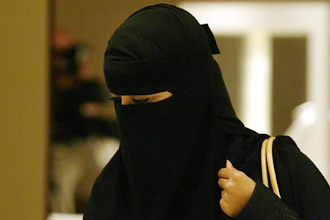
Facing jail: Hind Ahmas, left, could be sentenced to two years in prison for wearing a banned Islamic head covering in France 


Read more: http://www.dailymail.co.uk/news/article-2073579/Mother-32-set-woman-jailed-wearing-Islamic-veil.html#ixzz1gby385Ut


Embracing Modesty

A sister who recently started covering herself in the proper Islamic way wrote this article about her experience:

Change is hard, it seems impossible at times because it often challenges a seemingly impossible rigidness. Does that mean we should never try? Or should we take our chances? I took mine and I am glad I did!


God has been kind and life has been good. I have never experienced the hardships that people have in the search for one true meaning of life because it lied in front of me from the very beginning. Then why was I never able to see it or define it? That’s because I never lived it! I never considered myself a reverent or a true celebrant of piousness but I questioned: if I am calling you, why aren’t you answering? If you know what will bring me closer to you, why aren’t you being generous? If I am trying, why isn’t it enough? Because it was never enough!

All my life I have unknowingly practiced materialism. I have judged myself from the eyes of this world and trust me I have never lived up to its expectations. Trying was never good enough and achievements only carved ways to achieve more and more. With my religious values in front of me and my true conviction in God, every time this trying became a drag on me, I turned to Allah subhanahu wa ta'ala for help, and Alhamdulillah never got disappointed. Unfortunately every time He helped, it increased my resiliency towards living a life that we live at the expense of that life which we will continue to live. So I remained divided and confused? I never did enough and I never took my chances. Because to be honest I was afraid of change!

For 6 years I have been trying to live the true meaning of life but I never took a true initiative. Not that I did not know how to but because I never had the guts. Knowing what the right path is and still following a wrong one is more distressing than not knowing at all. It was hard to go on with a muddled headed philosophy of “change will come along; you just need to give it some time”. Funny thing is I gave it all the time in the world but it never came along! Not until I took that initiative and braced it with open arms.

September 12th, 2011 was the day I started taking Hijab and gave up a major part of my life… “Materialism” Two months later I look back, I see nothing but scattered particles of dust blown away by wind, a timeline of events, gone too soon! Really? Because I have been striving for them for far too long. If such was the impermanence of all my efforts that I put into seeing happiness through the eyes of this world, then how come I became so foolish to believe in it at the first place? But now that I have let it go, I realize that it’s never too late. God always answers, He is forever generous; you just need to give up the insubstantial for something that will remain forever.

When I decided to give up the induced epidemic of fashion, it almost seemed impossible. How can I stop following what’s in style? How can I just not make use of all those new and pretty dresses that I have? Most of all how can I suddenly cover myself in black and let people look at me with suspicion and later on find this unexpected change amusing. But wait a min all my life I have been doing what they think is right and look what I got from it. Nothing, I am empty handed. But now that I am putting my efforts in the right direction I feel sorry for all the time that I have wasted. The change that Allah helped me bring in myself made me understand the superiority and preeminence of submitting oneself to Allah subhanahu wa ta'ala.

The reaction of people around me was not much encouraging. My mother was not so sure that I would be able to pull it off, my sister said I am some crazy lunatic not knowing what she is up against (she thought I wasn’t serious) and my friends did not approve of this “radicalism”. I remember even the minute details of how nervous I was the first day I put on a plain black loose gown and covered my face so that only eyes were visible. When I entered in the class I could feel people staring at me and murmuring with some strange unease. I couldn’t understand everything but surely heard them saying, “is that her”? “What happened to her”? “Strange”! I had no option but to ignore them. Without saying anything I just came and sat with my best friend hoping for an approval. She looked at me, smiled and turned away. At that time i thought maybe it wasn’t such a good idea. Later that day I encountered diverse reactions. Few admired it, some remained indifferent and many asked such questions as “what happened to you? Your family is broadminded, why are you doing this?

These reactions were making things hard for me until I thought to myself that how can you know the true strength of your faith if it goes untested and how can you feel at odds when you know Allah subhanahu wa ta'ala is watching you and He is with you. Things became easier for me when a good friend told me that these hostile comments and opposing remarks is the best part because you get rewarded for that! So as the time went by I became accustomed to it and now it’s becoming less and less difficult to carry it.

I feel at ease with a dignified simplicity. Sometimes I feel it has given me the power and has strengthened my will to be that individual who I really wanted to be all this time. Hijab has shown me my true prominence in Islam and has made me its ambassador; making me strong and keeping me away from immorality that I might otherwise be exposed to. I feel that my conduct, my efforts and my actions represent and teach Islam to people without me saying anything. It makes me feel safe and protected. Most of all it has given me power to strengthen my faith. You just need to take that one step towards change and Allah subhanahu wa ta'ala will never disappoint you. But it’s up to you to take the true initiative and make that change instead of waiting for it to come along all by itself! Now when I dress up in my “black loose gown” it feels so good to be doing it for a cause, for my roots, my religion and for my Creator!
Anonymous

poetry: You look at me and call me oppressed, Simply because of the way I'm dressed,

بسم الله الرحمن الرحيم

السلام عليكم ورحمة الله وبركاته

الحمد الله

(POETRY BY MUSLIMIAH)


You look at me and call me oppressed,
Simply because of the way I'm dressed,

You know me not for what's inside,
You judge the clothing I wear with pride,

My body's not for your eyes to hold,
You must speak to my mind, not my feminine mold,

I'm an individual, I'm no mans slave,
It's Allah's pleasure that I only crave,

I have a voice so I will be heard,
For in my heart I carry His word,

"O ye women, wrap close your cloak,
So you won't be bothered by ignorant folk",

Man doesn't tell me to dress this way,
It's a Law from Allaah that I obey,

Oppressed is something I'm truly NOT,
For liberation is what I've got,

It was given to me many years ago,
With the right to prosper, the right to grow,

I can climb mouth or cross the seas,
Expand my mind in all degrees,

For Allaah Himself gave us LIBERTY,
When He sent Islam,

To You and Me!


Ladies Edition: No Joking, laughing and fun with Non Mahrams

In the name of Allah , the Entirely Merciful, the Especially Merciful.


1/ Some sisters assume that since they are properly covered, its okay for them to sit around
and

talk, laugh, joke, etc. with the men, but that’s not right, even if he is ‘the Shaikh’.

As Allaah (swt) says:

"........then be not soft in speech, lest he in whose heart is a disease (of hypocrisy, or evil desire for adultery, etc.) should be moved with desire, but speak in an honourable manner."  
[Al-Quran:Surat Al-Ahzab:Verse 32]

So talk to them when there is a specific need, and in a manner that is not necessarily rude, yet it is polite but firm.

--------------------------------------------------------------------

2/ Staring at the Classmates/males/Muslims brothers or ‘checking them out’ is NOT Hijaab

Some of female Muslim sister are involved in staring at opposite at market, road, school, 

colleges and other places which is impressible. 

As Allah (swt) says: 

"And tell the believing women to lower their gaze (from looking at forbidden things), and protect their private parts (from illegal sexual acts, etc.) and not to show off their adornment except only that which is apparent (like palms of hands or one eye or both eyes for necessity to see the way, or outer dress like veil, gloves, head-cover, apron, etc.), and to draw their veils all over Juyubihinna (i.e. their bodies, faces, necks and bosoms, etc.) and not to reveal their adornment.........."
Allaah orders us to “lower your gaze” in the above verse. Why? Because a single ‘look’ can say

 more than a thousand words. So, even if you are properly covered, keep those eyes down, 

conduct yourself with ‘Hayaa’, and avoid ‘fitnah’

--------------------------------------------------------------------


3/ Chatting on the internet/phone is also against proper Hijab, either 
There is no such thing as “we’re just friends”. Talking to non-Mahrams is wrong even if it is 

through the internet or telephone. There are too many stories of illegal relationships, 

fornications, broken homes, extra-marital affairs and runaway brides to even mention. That 

is why in Islam anything that leads to haraam is also haraam. 


As Allaah (swt) says:

"........(Lawful to you in marriage) are chaste women from the believers and chaste women from those who were given the Scripture (Jews and Christians) before your time, when you have given their due Mahr (bridal money given by the husband to his wife at the time of marriage), desiring chastity (i.e. taking them in legal wedlock) not committing illegal sexual intercourse, nor taking them as girl-friends.........." 
[Al-Quran; Surat Ma'idah; Verse 5]  

USEFUL METHOD TO AVOID ZINA OF EYE, TONGUE, EAR AND BODY


In the Name of Allah, the Most Beneficent,
the Most Merciful.


Allah's Messenger (may peace be upon him) as saying. 


Allah fixed the very portion of adultery which a man will indulge in. 

There would be no escape from it. 

The adultery of the eye is the lustful look 

and the adultery of the ears is listening to voluptuous (song or talk) 

and the adultery of the tongue is licentious speech

and the adultery of the hand is the lustful grip (embrace) 

and the adultery of the feet is to walk (to the place) where he intends to commit adultery

and the heart yearns

and desires which he may or may not put into effect.

The Book of Poetry (Kitab Al-Sh`ir)


[Abu Huraira reported, Muslim :: Book 33 : Hadith 6422]

USEFUL METHOD TO AVOID ZINA OF DIFFERENT TYPE
  1. Proper Hijab
  2.  Abstaining from mix gatherings
  3.  Abstaining from music and films
  4.  Abstaining from copying members of other genders
  5. Punctuality in prayers
  6. Fasting frequently
  7.  Avoiding bad company of misguided friends
  8. Spend idle time in zikar e elahi,excercise or healthy entertainment
  9. Reading healthy literature  
  10. More involvement in professional life
  11. Polygamy
  12.  Early Marriage^   
  13. Lowering Your Gaza ^

    [copied  from Facebook Status of Allama Ibtisam Zaheer Elahi]
    expect ^

    ----------------------------------------------------------------------------- 
--------------------------------
compiled and composed by Mohammad Rana Usman Nisar

Important Issue but simple Answer By Allema Ibtisam Elahi Zaheer

 Praise be to Allaah.
 ALLAH has created
Men and women with different abilities and potentials

Allah has created men and women with different abilities and potentials.Men cannot give birth to child similarly women are not supposed to earn except that they do so voluntarily.Men are responsible for social and economic work and women are responsible for household and caretaking of children.West try to seduce women of Islam in the name of gender equality.Muslims should be conscious of this conspiracy.

Commentary:

1/ Women can work when they find it comfortable for them.But they should work by keeping in view the segregation of genders

2/ I have summarised it that they can do but they are not bound to do because the burden of economics should be on shoulders of men.As far as if they are interested in doing business they can indeed invest but it must be kept in mind that Islam has always recommended segregation of genders and Hijab must be mantained in any case.Therefore the best suited profession for them are teaching and medicine in which they can educate and cure other women


Copied From Facebook Status of Allema Ibtisam Elahi Zaheer 16 December at 06:54
Both commentaries are from Allema Ibtisam Elahi Zaheer copied from comment section of same Status

Will Allaah punish women who make a wanton display of their beauty (tabarruj)?


Praise be to Allaah. 


My question is about the grave sinners, we believe that his/her matter is up to Allah, if Allah wills He will punish or forgive them. But the hadeeth in which the prophet, peace be upon him says: “there are two types of people I have not seen, (until he mentions), and women who are clothed yet naked, they will not enter paradise or even smell its fragrance” this hadeeth was explained by imam an-nawawi, may Allah have mercy on him, as follows:
If they do what they do believing it is not haram, then they will never enter paradise. Or they may be punished in hell first then they will enter paradise.
This means they will definitely be punished first and they are of evil doers, is it possible that they might not be punished?.


According to Muslim belief, the one who commits a major sin is in grave danger and has exposed himself to the punishment of Allaah, but the will of Allaah is to decide, and Allaah may forgive or pardon him, or He may punish him in a manner commensurate with his sin, except for the one whose sin reaches the level of disbelief in Allaah. In that case he will deserve to be punished and to abide forever in Hell.

Shaykh al-Islam Ibn Taymiyah was asked – as it says in Majmoo’ al-Fataawa (11/646) – about women who pile their hair on top of their heads, and they will not see Paradise or smell its fragrance. But it is narrated in the hadeeth from the Messenger of Allaah (peace and blessings of Allaah be upon him): “Whoever says La ilaaha ill-Allaah will enter Paradise.”

He replied:

It is proven in Saheeh Muslim and elsewhere from Abu Hurayrah that the Prophet (peace and blessings of Allaah be upon him) said: “There are two types of the people of Hell whom I have not seen: men with whips like the tails of cattle with which they strike the people, and women who are clothed but naked, walking with an enticing gait, with something like the humps of camels on their heads. They will not enter Paradise nor even smell its fragrance, and its fragrance can be smelled from such and such a distance.”

Whoever claims that this hadeeth is not saheeh and that what it mentions of the severe punishment is not true is ignorant and has gone astray from the path of sharee’ah, and he deserves a punishment that will deter him and other ignorant people like him who object to the saheeh ahaadeeth that are soundly narrated from the Messenger of Allaah (peace and blessings of Allaah be upon him).

There are many saheeh ahaadeeth about this warning. For example:

“Whoever kills a mu’aahid unlawfully will not smell the fragrance of Paradise, although its fragrance may be detected from a distance of forty years.”

“No one will enter Paradise in whose heart is a mustard seed’s worth of arrogance.”

“There are three to whom Allaah will not speak on the Day of Resurrection nor will He praise them, and their will be a painful torment: an old man who commits zina, a king who tells lies and a poor man who is arrogant.”

There are verses in the Qur’aan which speak of this warning, such as the verse in which Allaah says (interpretation of the meaning):

“And whosoever disobeys Allaah and His Messenger (Muhammad صلى الله عليه وسلم), and transgresses His limits, He will cast him into the Fire, to abide therein; and he shall have a disgraceful torment”

[al-Nisa’ 4:14]

This is something on which the Muslims are agreed, that the warning in the Qur’aan and Sunnah to those who commit major sins is true, but Allaah has stated in the Qur’aan and the Sunnah of His Messenger (peace and blessings of Allaah be upon him) that the warning mentioned in the Qur’aan and Sunnah does not apply to the one who repents, as He says (interpretation of the meaning): “Say: O ‘Ibaadi (My slaves) who have transgressed against themselves (by committing evil deeds and sins)! Despair not of the Mercy of Allaah, verily, Allaah forgives all sins. Truly, He is Oft‑Forgiving, Most Merciful”

[al-Zumar 39:53]

i.e., to the one who repents.

In another verse Allaah says (interpretation of the meaning):

“Verily, Allaah forgives not that partners should be set up with Him (in worship), but He forgives except that (anything else) to whom He wills” [al-Nisa’ 4:48].

This applies to the one who does not repent. Shirk will not be forgiven, but with regard to anything less than shirk, if Allaah wills He will forgive and if He wills He will punish for it.

In al-Saheehayn it is narrated that the Prophet (peace and blessings of Allaah be upon him) said: “No tiredness, exhaustion, worry, grief, distress or harm befalls a believer in this world, not even a thorn that pricks him, but Allaah expiates some of his sins thereby.”

Hence when the verse (interpretation of the meaning): “whosoever works evil, will have the recompense thereof” [al-Nisa’ 4:123] was revealed, Abu Bakr said: O Messenger of Allaah, this is going to destroy us; who among us has not done evil? He said: “O Abu Bakr, do you not get tired? Do you not grieve? Do you not go through hardship? That is part of the recompense.”

By means of calamities in this world, Allaah expiates the sins of the believers that may be expiated by means thereof, and the same applies to the good deeds that he does. Allaah says (interpretation of the meaning): “Verily, the good deeds remove the evil deeds” [Hood 11:114]. And the Prophet (peace and blessings of Allaah be upon him) said: “The five daily prayers, from one Jumu’ah to the next, and one Ramadaan to the next, are expiations for whatever (of minor sins) come in between them, so long as one avoids major sins.” And Allaah does not wrong His slaves in the slightest, as He says (interpretation of the meaning):

“So whosoever does good equal to the weight of an atom (or a small ant) shall see it.

8. And whosoever does evil equal to the weight of an atom (or a small ant) shall see it”

[al-Zalzalah 99:7-8].

So the warning may be cancelled out, either by means of repentance, or by means of good deeds that one does which are equal to the bad deeds, or by means of calamities through which Allaah expiates sins, or by other means. End quote.

Hence the scholars interpreted every verse or hadeeth the apparent meaning of which is that those who commit major sins will abide forever in Hell in ways that are in accordance with other texts of the Qur’aan and Sunnah.

Al-Nawawi (may Allaah have mercy on him) said in Sharh Muslim (17/191):

The words of the Prophet (peace and blessings of Allaah be upon him), “will not enter Paradise” may be interpreted in two ways:

(i)

They may be interpreted as referring to the one who regards what is haraam as permissible, despite knowing that it is haraam; so she is a kaafir who will abide forever in Hell and will never enter Paradise.

(ii)

It may be interpreted as meaning that she will not enter it at first along with those who are successful. End quote.

It says in Fataawa al-Lajnah al-Daa’imah (2/27):

Question: is it permissible for us to believe that the women who are clothed yet naked are kaafirs, because the Prophet (peace and blessings of Allaah be upon him) said, “They will not enter Paradise nor will they smell its fragrance…”?

Answer:

Those who believe that it is permissible after being told about the ruling and having it explained to them may be regarded as kaafirs. Those who do not regard it as permissible but still go out clothed yet naked are not kaafirs, but they are committing a major sin and they have to give it up and repent to Allaah from that, in the hope that Allaah may forgive them. If a woman dies in that state without having repented to Allaah, then she is subject to the will of Allaah, like all those who commit sin, because Allaah says (interpretation of the meaning):

“Verily, Allaah forgives not that partners should be set up with Him (in worship), but He forgives except that (anything else) to whom He wills” [al-Nisa’ 4:48]. End quote.

It also says (17/104):

Those women who regard that type of dressing as permissible are kaafirs who will abide forever in Hell if they die in that state, and they will not enter Paradise or smell its fragrance. If they wear that type of clothing even though they believe it is haraam, then they are committing a major sin, but that does not put them beyond the pale of Islam, and they are subject to the will of Allaah: if Allaah wills He will forgive them and if He wills He will punish them for the bad deeds they have committed, and they will not enter Paradise or smell its fragrance until after they have been punished first.

This is the view of Ahl al-Sunnah, which reconciles the texts which speak of promise with those which speak of warning. This is the middle path between the views of the Murji’is, Khawaarij and Mu’tazliah.

Shaykh Ibn Baaz said in Majmoo’ al-Fataawa (6/356):

With regard to the words of the Prophet (peace and blessings of Allaah be upon him), “they will not enter Paradise nor smell its fragrance”, this is a stern warning, but that does not imply that they are kaafirs, and they will not abide forever in Hell; this applies to all sinners who die as Muslims. Rather they and other sinners are all given the threat of Hell for their sins, but they are subject to the will of Allaah: if He wills He will pardon them and forgive them, and if He wills He will punish them, as He said in two places in Soorat al-Nisa’: “Verily, Allaah forgives not that partners should be set up with Him (in worship), but He forgives except that (anything else) to whom He wills” [al-Nisa’ 4:48]. The sinner who enters Hell will not abide therein forever as is the case with the kaafir; rather those who are meant to abide there forever – such as the murderer, adulterer and one who committed suicide – their abiding therein is not the same as that of the kuffaar, rather it is an abiding that will come to an end, according to Ahl al-Sunnah wa’l-Jamaa’ah, unlike the Khawaarij and Mutazilah and those innovators who followed in their footsteps. The mutawaatir saheeh ahaadeeth from the Messenger of Allaah (peace and blessings of Allaah be upon him) indicate that he (peace and blessings of Allaah be upon him) will intercede for the sinners among his ummah, and that Allaah will accept his intercession several times, and each time He will stipulate a number for him and he will bring them forth from Hell. The same applies to the rest of the Messengers, believers and angels – all of them will intercede by His leave and He will accept their intercession for whomever He wills of the people of Tawheed who entered Hell because of their sins and are Muslims. Then there will remain in Hell the rest of the sinners who were not included in the intercession of the intercessors, but Allaah will bring them out by His mercy and kindness, and there will be no one left in Hell but the kuffaar who will abide therein forever and ever, as Allaah says concerning the kuffaar (interpretation of the meaning):

“whenever it abates, We shall increase for them the fierceness of the Fire”

[al-Isra’ 17:97]

“So taste you (the results of your evil actions). No increase shall We give you, except in torment”

[al-Naba’ 78:30]

And He says concerning the kuffaar who worship idols (interpretation of the meaning):

“Thus Allaah will show them their deeds as regrets for them. And they will never get out of the Fire”

[al-Baqarah 2:167]

“Verily, those who disbelieve, if they had all that is in the earth, and as much again therewith to ransom themselves thereby from the torment on the Day of Resurrection, it would never be accepted of them, and theirs would be a painful torment”

[al-Maa’idah 5:36]

“They will long to get out of the Fire, but never will they get out therefrom; and theirs will be a lasting torment”

[al-Maa’idah 5:37]

And there are many similar verses. We ask Allaah to keep us safe and sound from being like them. End quote.

To sum up, the woman who makes a wanton display of herself (tabarruj), despite the fact that she is exposing herself to a painful punishment from Allaah, is still subject to the will of Allaah: He may forgive her and not punish her, or He may subject her to a painful punishment. Moreover, some of the believers who commit sins will inevitably enter Hell, as is mentioned in the mutawaatir ahaadeeth.  

And Allaah knows best.
________________________________________
 INFORMATION: 

http://islamqa.com/en/ref/9924

Islamic teaching on CORRECT HIJAB


Praise be to Allaah.

Shaykh al-Albaani (may Allaah have mercy on him) said:

The conditions of hijaab:


Firstly:

(It should cover all the body apart from whatever has been exempted).

Allaah says (interpretation of the meaning):
“O Prophet! Tell your wives and your daughters and the women of the believers to draw their cloaks (veils) all over their bodies (i.e. screen themselves completely except the eyes or one eye to see the way). That will be better, that they should be known (as free respectable women) so as not to be annoyed. And Allaah is Ever Oft-Forgiving, Most Merciful.”

This aayah clearly states that it is obligatory to cover all of a woman’s beauty and adornments and not to display any part of that before non-mahram men (“strangers”) except for whatever appears unintentionally, in which case there will be no sin on them if they hasten to cover it up.

Al-Haafiz ibn Katheer said in his Tafseer:

This means that they should not display any part of their adornment to non-mahrams, apart from that which it is impossible to conceal. Ibn Mas’ood said: such as the cloak and robe, i.e., what the women of the Arabs used to wear, an outer garment which covered whatever the woman was wearing, except for whatever appeared from beneath the outer garment. There is no sin on a woman with regard to this because it is impossible to conceal it.

Secondly


(it should not be an adornment in and of itself).

Allaah says (interpretation of the meaning):

“… and not to show off their adornment…” [al-Noor 24:31]. The general meaning of this phrase includes the outer garment, because if it is decorated it will attract men’s attention to her. This is supported by the aayah in Soorat al-Ahzaab (interpretation of the meaning):

“And stay in your houses, and do not display yourselves like that of the times of ignorance” [al-Ahzaab 33:33]. It is also supported by the hadeeth in which the Prophet (peace and blessings of Allaah be upon him) said: “There are three, do not ask me about them: a man who leaves the jamaa’ah, disobeys his leader and dies disobedient; a female or male slave who runs away then dies; and a woman whose husband is absent and left her with everything she needs, and after he left she made a wanton display of herself. Do not ask about them.”

(Narrated by al-Haakim, 1/119; Ahmad, 6/19; from the hadeeth of Faddaalah bint ‘Ubayd. Its isnaad is saheeh and it is in al-Adab al-Mufrad).

Thirdly:


(It should be thick and not transparent or “see-thru”)

- because it cannot cover properly otherwise. Transparent or see-thru clothing makes a woman more tempting and beautiful. Concerning this the Prophet (peace and blessings of Allaah be upon him) said: “During the last days of my ummah there will be women who are clothed but naked, with something on their heads like the humps of camels. Curse them, for they are cursed.” Another hadeeth adds: “They will not enter Paradise or even smell its fragrance, although its fragrance can be detected from such and such a distance.”

(Narrated by Muslim from the report of Abu Hurayrah).

Ibn ‘Abd al-Barr said: what the Prophet (peace and blessings of Allaah be upon him) meant was women who wear clothes made of light fabric which describes and does not cover. They are clothed in name but naked in reality.

Transmitted by al-Suyooti in Tanweer al-Hawaalik, 3/103.

Fourthly:

(It should be loose, not tight so that it describes any part of the body).

The purpose of clothing is to prevent fitnah (temptation), and this can only be achieved if clothes are wide and loose. Tight clothes, even if they conceal the colour of the skin, still describe the size and shape of the body or part of it, and create a vivid image in the minds of men. The corruption or invitation to corruption that is inherent in that is quite obvious. So the clothes must be wide. Usaamah ibn Zayd said: “The Messenger of Allaah (peace and blessings of Allaah be upon him) gave me a thick Egyptian garment that was one of the gifts given to him by Duhyat al-Kalbi, and I gave it to my wife to wear. He said, ‘Why do I not see you wearing that Egyptian garment?’ I said, ‘I gave it to my wife to wear.’ He said, ‘Tell her to wear a gown underneath it, for I am afraid that it may describe the size of her bones.’” (Narrated by al-Diyaa’ al-Maqdisi in al-Ahaadeeth al-Mukhtaarah, 1/442, and by Ahmad and al-Bayhaqi, with a hasan isnaad).

Fifthly:

(It should not be perfumed with bakhoor or fragrance)


There are many ahaadeeth which forbid women to wear perfume when they go out of their houses. We will quote here some of those which have saheeh isnaads:

Abu Moosa al-Ash’ari said: the Messenger of Allaah (peace and blessings of Allaah be upon him) said: “Any woman who puts on perfume then passes by people so that they can smell her fragrance, is an adulteress.”

Zaynab al-Thaqafiyyah reported that the Prophet (peace and blessings of Allaah be upon him) said: “If any one of you (women) goes out to the mosque, let her not touch any perfume.”

Abu Hurayrah said: the Messenger of Allaah (peace and blessings of Allaah be upon him) said: “Any woman who has scented herself with bakhoor (incense), let her not attend ‘Ishaa’ prayers with us.”

Moosa ibn Yassaar said that a woman passed by Abu Hurayrah and her scent was overpowering. He said, “O female slave of al-Jabbaar, are you going to the mosque?” She said, “Yes,” He said, “And have you put on perfume because of that?” She said, “Yes.” He said, “Go back and wash yourself, for I heard the Messenger of Allaah (peace and blessings of Allaah be upon him) say: ‘If a woman comes out to the mosque and her fragrance is overpowering, Allaah will not accept any prayer from her until she goes home and washes herself.’”

These ahaadeeth are general in implication. Just as the prohibition covers perfume applied to the body, it also covers perfume applied to the clothes, especially in the third hadeeth, where bakhoor (incense) is mentioned, because incense is used specifically to perfume the clothes.

The reason for this prohibition is quite clear, which is that women’s fragrance may cause undue provocation of desires. The scholars also included other things under this heading of things to be avoided by women who want to go to the mosque, such as beautiful clothes, jewellery that can be seen, excessive adornments and mingling with men. See Fath al-Baari, 2/279.

Ibn Daqeeq al-‘Eed said:

This indicates that it is forbidden for a woman who wants to go to the mosque to wear perfume, because this causes provocation of men’s desires. This was reported by al-Manaawi in Fayd al-Qadeer, in the commentary on the first hadeeth of Abu Hurayrah quoted above.

Sixthly:

(It should not resemble the clothing of men)


It was reported in the saheeh ahaadeeth that a woman who imitates men in dress or in other ways is cursed. There follow some of the ahaadeeth that we know:

Abu Hurayrah said: “The Messenger of Allaah (peace and blessings of Allaah be upon him) cursed the man who wears women’s clothes, and the woman who wears men’s clothes.”

‘Abd-Allaah ibn ‘Amr said: I heard the Messenger of Allaah (peace and blessings of Allaah be upon him) say: ‘They are not part of us, the women who imitate men and the men who imitate women.’”

Ibn ‘Abbaas said: “The Prophet (peace and blessings of Allaah be upon him) cursed effeminate men and masculine women. He said, ‘Throw them out of your houses.’” He said: “The Prophet (peace and blessings of Allaah be upon him) expelled So and so, and ‘Umar expelled So and so.” According to another version: “The Messenger of Allaah (peace and blessings of Allaah be upon him) cursed men who imitate women and women who imitate men.”

‘Abd-Allaah ibn ‘Amr said: “The Messenger of Allaah (peace and blessings of Allaah be upon him) said: ‘There are three who will not enter Paradise and Allaah will not even look at them on the Day of Resurrection: one who disobeys his parents, a woman who imitates men, and the duyooth (cuckold, weak man who feels no jealousy over his womenfolk).”

Ibn Abi Maleekah – whose name was ‘Abd-Allaah ibn ‘Ubayd-Allaah – said: “It was said to ‘Aa’ishah (may Allaah be pleased with her), ‘What if a woman wears (men’s) sandals?’ She said: ‘The Messenger of Allaah (peace and blessings of Allaah be upon him) cursed women who act like men.’”

These ahaadeeth clearly indicate that it is forbidden for women to imitate men and vice versa, This usually includes dress and other matters, apart from the first hadeeth quoted above, which refers to dress only.

Abu Dawood said, in Masaa’il al-Imaam Ahmad (p. 261): “I heard Ahmad being asked about a man who dresses his slave woman in a tunic. He said, ‘Do not clothe her in men’s garments, do not make her look like a man.” Abu Dawood said: “I said to Ahmad, Can he give her bachelor sandals to wear? He said, No, unless she wears them to do wudoo’. I said, What about for beauty? He said, No. I said, Can he cut her hair short? He said, No.”

Seventhly:

(It should not resemble the dress of kaafir women).

It is stated in sharee’ah that Muslims, men and women alike, should not resemble or imitate the kuffaar with regard to worship, festivals or clothing that is specific to them. This is an important Islamic principle which nowadays, unfortunately, is neglected by many Muslims, even those who care about religion and calling others to Islam. This is due either to ignorance of their religion, or because they are following their own whims and desires, or because of deviation, combined with modern customs and imitation of kaafir Europe. This was one of the causes of the Muslims’ decline and weakness, which enabled the foreigners to overwhelm and colonize them. “…Verily, Allaah will not change the condition of a people as long as they do not change their state themselves …” [al-Ra’d 13:11 – interpretation of the meaning]. If only they knew.

It should be known that there is a great deal of saheeh evidence for these important rules in the Qur’aan and Sunnah, and that the evidence in the Qur’aan is elaborated upon in the Sunnah, as is always the case.

Eighthly:(It should not be a garment of fame and vanity).

Ibn ‘Umar (may Allaah be pleased with him) said: “The Messenger of Allaah (peace and blessings of Allaah be upon him) said: ‘Whoever wears a garment of fame and vanity in this world, Allaah will clothe him in a garment of humiliation on the Day of Resurrection, then He will cause Fire to flame up around him."

(Hijaab al-Mar’ah al-Muslimah, p. 54-67).

And Allaah knows best.
Hijaab al-Mar’ah al-Muslimah, p. 54-67

--------------------------------------------------------------------------------------------------------
Source: http://islamqa.com/en/ref/6991 
-----------------
MORE ON HIJAB 
http://islamiliveforit.blogspot.com/2010/08/islamic-teaching-about-hijab.html
------- 

Do you know that Hijab is Order of Allah in AL-QURAN ?

Praise be to Allaah.


Al-Quran on hijab:


1 – Allaah says (interpretation of the meaning):


“And tell the believing women to lower their gaze (from looking at forbidden things), and protect their private parts (from illegal sexual acts) and not to show off their adornment except only that which is apparent (like both eyes for necessity to see the way, or outer palms of hands or one eye or dress like veil, gloves, headcover, apron), and to draw their veils all over Juyoobihinna (i.e. their bodies, faces, necks and bosoms) and not to reveal their adornment except to their husbands, or their fathers, or their husband’s fathers, or their sons, or their husband’s sons, or their brothers or their brother’s sons, or their sister’s sons, or their (Muslim) women (i.e. their sisters in Islam), or the (female) slaves whom their right hands possess, or old male servants who lack vigour, or small children who have no sense of feminine sex. And let them not stamp their feet so as to reveal what they hide of their adornment. And all of you beg Allaah to forgive you all, O believers, that you may be successful”


[al-Noor 24:31]


2 – Allaah says (interpretation of the meaning):


“And as for women past childbearing who do not expect wedlock, it is no sin on them if they discard their (outer) clothing in such a way as not to show their adornment. But to refrain (i.e. not to discard their outer clothing) is better for them. And Allaah is All‑Hearer, All‑Knower”


[al-Noor 24:60]


“Women past childbearing” are those who no longer menstruate, so they can no longer get pregnant or bear children.


We shall see below the words of Hafsah bint Sireen and the way in which she interpreted this verse.


3 – Allaah says (interpretation of the meaning):


“O Prophet! Tell your wives and your daughters and the women of the believers to draw their cloaks (veils) all over their bodies (i.e. screen themselves completely except the eyes or one eye to see the way). That will be better, that they should be known (as free respectable women) so as not to be annoyed. And Allaah is Ever Oft‑Forgiving, Most Merciful”


[al-Ahzaab 33:59]


4 – Allaah says (interpretation of the meaning):
“O you who believe! Enter not the Prophet’s houses, unless permission is given to you for a meal, (and then) not (so early as) to wait for its preparation. But when you are invited, enter, and when you have taken your meal, disperse without sitting for a talk. Verily, such (behaviour) annoys the Prophet, and he is shy of (asking) you (to go); but Allaah is not shy of (telling you) the truth. And when you ask (his wives) for anything you want, ask them from behind a screen, that is purer for your hearts and for their hearts. And it is not (right) for you that you should annoy Allaah’s Messenger, nor that you should ever marry his wives after him (his death). Verily, with Allaah that shall be an enormity”


[al-Ahzaab 33:53]


With regard to the Ahaadeeth:


1 – It was narrated from Safiyyah bint Shaybah that ‘Aa’ishah (may Allaah be pleased with her) used to say:
When these words were revealed – “and to draw their veils all over Juyoobihinna (i.e. their bodies, faces, necks and bosoms)” – they took their izaars (a kind of garment) and tore them from the edges and covered their faces with them.


Narrated by al-Bukhaari, 4481.


The following version was narrated by Abu Dawood (4102):


May Allaah have mercy on the Muhaajir women. When Allaah revealed the words “and to draw their veils all over Juyoobihinna (i.e. their bodies, faces, necks and bosoms)”, they tore the thickest of their aprons (a kind of garment) and covered their faces with them.


Shaykh Muhammad al-Ameen al-Shanqeeti (may Allaah have mercy on him) said:


This hadeeth clearly states that what the Sahaabi women mentioned here understood from this verse – “and to draw their veils all over Juyoobihinna (i.e. their bodies, faces, necks and bosoms)” – was that they were to cover their faces, and that they tore their garments and covered their faces with them, in obedience to the command of Allaah in the verse where He said “and to draw their veils all over Juyoobihinna (i.e. their bodies, faces, necks and bosoms)” which meant covering their faces. Thus the fair-minded person will understand that woman’s observing hijab and covering her face in front of men is established in the saheeh Sunnah that explains the Book of Allaah. ‘Aa’ishah (may Allaah be pleased with her) praised those women for hastening to follow the command of Allaah given in His Book. It is known that their understanding of the words “and to draw their veils all over Juyoobihinna (i.e. their bodies, faces, necks and bosoms)” as meaning covering the face came from the Prophet (peace and blessings of Allaah be upon him), because he was there and they asked him about everything that they did not understand about their religion. And Allaah says (interpretation of the meaning):


“And We have also sent down unto you (O Muhammad) the Dhikr [reminder and the advice (i.e. the Qur’aan)], that you may explain clearly to men what is sent down to them, and that they may give thought”


[al-Nahl 16:44]


Ibn Hajar said in Fath al-Baari: There is a report of Ibn Abi Haatim via ‘Abd-Allaah ibn ‘Uthmaan ibn Khaytham from Safiyyah that explains that. This report says: We mentioned the women of Quraysh and their virtues in the presence of ‘Aa’ishah and she said: “The women of Quraysh are good, but by Allaah I have never seen any better than the women of the Ansaar, or any who believed the Book of Allaah more strongly or had more faith in the Revelation. When Soorat al-Noor was revealed – “and to draw their veils all over Juyoobihinna (i.e. their bodies, faces, necks and bosoms)” – their menfolk came to them and recited to them what had been revealed, and there was not one woman among them who did not go to her apron, and the following morning they prayed wrapped up as if there were crows on their heads. It was also narrated clearly in the report of al-Bukhaari narrated above, where we see ‘Aa’ishah (may Allaah be pleased with her), who was so knowledgeable and pious, praising them in this manner and stating that she had never seen any women who believed the Book of Allaah more strongly or had more faith in the Revelation. This clearly indicates that they understood from this verse – “and to draw their veils all over Juyoobihinna (i.e. their bodies, faces, necks and bosoms)” – that it was obligatory to cover their faces and that this stemmed from their belief in the Book of Allaah and their faith in the Revelation. It also indicates that women’s observing hijab in front of men and covering their faces is an act of belief in the Book of Allaah and faith in the Revelation. It is very strange indeed that some of those who claim to have knowledge say that there is nothing in the Qur’aan or Sunnah that says that women have to cover their faces in front of non-mahram men, even though the Sahaabi women did that in obedience to the command of Allaah in His Book, out of faith in the Revelation, and that this meaning is also firmly entrenched in the Sunnah, as in the report from al-Bukhaari quoted above. This is among the strongest evidence that all Muslim women are obliged to observe hijab.


Adwa’ al-Bayaan, 6/594-595.


2 – It was narrated from ‘Aa’ishah that the wives of the Prophet (peace and blessings of Allaah be upon him) used to go out at night to al-Manaasi’ (well known places in the direction of al-Baqee’) to relieve themselves and ‘Umar used to say to the Prophet (peace and blessings of Allaah be upon him), “Let your wives be veiled.” But the Messenger of Allaah (peace and blessings of Allaah be upon him) did not do that. Then one night Sawdah bint Zam’ah, the wife of the Prophet (peace and blessings of Allaah be upon him), went out at ‘Isha’ time and she was a tall woman. ‘Umar called out to her: “We have recognized you, O Sawdah!” hoping that hijab would be revealed, then Allaah revealed the verse of hijab.


Narrated by al-Bukhaari, 146; Muslim, 2170.


3 – It was narrated from Ibn Shihaab that Anas said: I am the most knowledgeable of people about hijab. Ubayy ibn Ka’b used to ask me about it. When the Messenger of Allaah (peace and blessings of Allaah be upon him) married Zaynab bint Jahsh, whom he married in Madeenah, he invited the people to a meal after the sun had risen. The Messenger of Allaah (peace and blessings of Allaah be upon him) sat down and some men sat around him after the people had left, until the Messenger of Allaah (peace and blessings of Allaah be upon him) stood up and walked a while, and I walked with him, until he reached the door of ‘Aa’ishah’s apartment. Then he thought that they had left so he went back and I went back with him, and they were still sitting there. He went back again, and I went with him, until he reached the door of ‘Aa’ishah’s apartment, then he came back and I came back with him, and they had left. Then he drew a curtain between me and him, and the verse of hijab was revealed.


Al-Bukhaari, 5149; Muslim, 1428.


4 – It was narrated from ‘Urwah that ‘Aa’ishah said: The Messenger of Allaah (peace and blessings of Allaah be upon him) used to pray Fajr and the believing women would attend (the prayer) with him, wrapped in their aprons, then they would go back to their houses and no one would recognize them.


Narrated by al-Bukhaari, 365; Muslim, 645.


5 – It was narrated that ‘Aa’ishah (may Allaah be pleased with her) said: “The riders used to pass by us when we were with the Messenger of Allaah (S) in ihraam, and when they drew near to us we would lower our jilbabs from our heads over our faces, then when they had passed we would uncover them again.


Narrated by Abu Dawood, 1833; Ibn Maajah, 2935; classed as saheeh by Ibn Khuzaymah (4,203) and by al-Albaani in Kitaab Jilbaab al-Mar’ah al-Muslimah.


6 – It was narrated that Asma’ bint Abi Bakr said: We used to cover our faces in front of men.


Narrated by Ibn Khuzaymah, 4/203; al-Haakim, 1/624. He classed it as saheeh and al-Dhahabi agreed with him. It was also classed as saheeh by al-Albaani in Jilbaab al-Mar’ah al-Muslimah.


7 – It was narrated that ‘Aasim al-Ahwaal said: We used to enter upon Hafsah bint Sireen who had put her jilbab thus and covered her face with it, and we would say to her: May Allaah have mercy on you. Allaah says (interpretation of the meaning): “And as for women past childbearing who do not expect wedlock, it is no sin on them if they discard their (outer) clothing in such a way as not to show their adornment” [al-Noor 24:60]. And she would say to us: What comes after that? We would say: “But to refrain (i.e. not to discard their outer clothing) is better for them”. And she would say: That is confirming the idea of hijab.


Narrated by al-Bayhaqi, 7/93.


And Allaah knows best.
Islam Q &A
---------------------------------------------------------------------------------------------------
source: http://islamqa.com/en/ref/13998/hijab

Disqus Shortname

designcart